
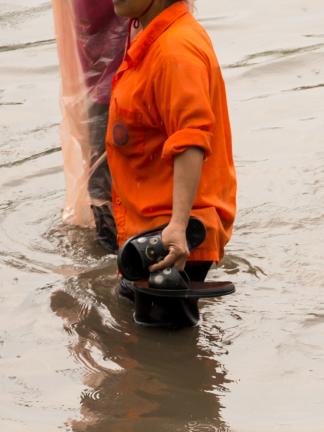
In a flood-prone country like the Philippines, the rainy season can turn streets into streams and rivers in the blink of an eye. Nowadays, floods have become so frequent that most people opt to rush home at the slightest sign of a downpour to prevent waterlogged shoes and wet belongings.
And it isn't just unpleasant dampness people have to worry about—a common problem during flood season is the spread of infection-causing germs and other disease carriers like mosquitoes, rats, and cockroaches.
KEY TAKEAWAYS
Floods significantly increase the risk of contracting communicable diseases.
Immediate washing and use of protective gear are essential for protection.
The Hazards of Floodwater
According to the World Health Organization (WHO), floods usually increase the risk of communicable diseases. A communicable disease is a type of illness that spreads either from person to person or person to animal, and during a flood, you can either get sick from contaminated floodwater or be bitten by insects that carry a host of unsavory illnesses.
DISEASES YOU CAN GET DURING A FLOOD
WATER-BORNE: Typhoid Fever, Cholera, Leptospirosis
VECTOR-BORNE (from living organisms): Malaria, Dengue, Yellow Fever
Workers who handle corpses, soil, or feces also face the additional hazard of contracting illnesses while doing their jobs, as flooding makes it easier to expose themselves to the toxic waste they handle. Some examples include:
FOR WORKERS HANDLING CORPSES: Tuberculosis, HIV, Diarrhea
FOR WORKERS HANDLING SOIL OR FECES: Tetanus
How to Protect Yourself During a Flood
So what do you do when wading through the flood seems inevitable?
The Centers for Disease Control and Prevention (CDC) notes that if you come into contact with floodwater, there are a few things you can do to help prevent yourself from getting sick:
If you have any open wounds or injuries, either avoid flooded places or ensure they're covered in waterproof bandages and properly cleaned immediately after.
Wear appropriate attire, such as rubber boots, gloves, or goggles.
Immediately wash the areas of your body that have come in contact with floodwater in a safe, dry place.
Wash your hands and feet after going through a flood.
Immediately clean any clothes that have been exposed to the flood in hot water and detergent before using them again.
How Do You Protect Yourself from Floodwater Diseases?
When passing through floodwater becomes an unfortunate regular occurrence for you, normal soap might seem too mild a skin disinfectant for all the germs you're exposed to. And you're not wrong for thinking that.
In a study by Eggers et al., they tested how effective two common antiseptics (povidone iodine and chlorhexidine gluconate) were versus plain soap in eliminating a common bacterium (E. coli) and virus (the murine norovirus).3
They found that both antiseptics outperformed plain soap in eliminating E. coli, but when it came to the norovirus, povidone iodine outperformed the other two agents in reducing it, while chlorhexidine gluconate did worse than plain soap.
An Easy Way to Help Keep You Safe
Our POVIDONE-IODINE (BETADINE®) Skin Cleanser offers Triple Action Protection that fights against 99.99% of bacteria, viruses, and fungi in as fast as 30 seconds, as proven in lab tests, making it an essential tool during those rainy days.
Here's the best way to use it:
Cleanse First: After removing contaminated clothing, thoroughly wash affected areas of body parts using POVIDONE-IODINE (BETADINE®) Skin Cleanser.
Lather and wait: Let it lather on wet skin and allow it to stay on the affected area for up to one minute before rinsing. This contact time allows the povidone iodine antiseptic to work its magic.
Rinse Off and Dry Completely: After rinsing off the cleanser thoroughly, ensure your skin is completely dry before getting dressed, as moisture encourages bacterial growth.
So if you want to level up your hygiene, help get that clean feel you deserve with this povidone-iodine antiseptic cleanser instead of just washing with regular soap4 — your future self will thank you for it.
(NOTE: PVP-I can/may not prevent all types of diseases you may have been exposed to during a flood. Consult a doctor for more specific advice regarding any additional management you may need after exposure that is best suited for your situation.)
Not recommended for continuous daily use throughout the year. If symptoms persist, consult your doctor. ASC I0006P011226B


