
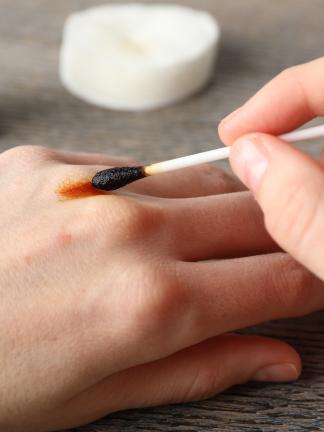
Whether it's a minor cut from doing household chores or an injury that happens while traveling, wounds are a common part of everyday life. No matter how or where a wound occurs, prompt and proper treatment is essential to help prevent complications such as recurring infections and delayed healing.1,3
However, wound care can sometimes be inconvenient, especially when multiple products are needed for different steps—such as a cleanser to remove dirt and debris, and a disinfectant to help eliminate germs and reduce the risk of infection.
The good news is that some wound care products can serve multiple purposes. One example is Povidone-iodine (PVP-I), which can be used across various stages of wound management. In this article, we'll explore the benefits of PVP-I and how it can help simplify wound care.
Key takeaways
- PVP-I can be used in various steps of the wound care and management process, all without the sting of alcohol.
- PVP-I products can be used to clean wounds and remove germs on broken skin.
- PVP-I disinfects and treats by killing 99.99% of infection-causing bacteria, viruses, and fungi, as well as disrupting the biofilms that make wounds harder to heal (based on in-vitro data).1
- PVP-I can also aid in the wound healing process. It protects by preventing wound infections and supporting4 the healing process.1
Povidone-Iodine Can Be Used as a Cleanser
When you get wounded, your body does its best to stop the bleeding, trap and get rid of germs and any harmful particles that might have entered the wound, and replace the damaged tissue with new tissue.4
But some factors can interfere with the wound-healing process. Sometimes the microorganisms form biofilms, which act like a protective fortress that hides them from the immune system and make wounds harder to heal.1
That's why you want to clean your wounds. Would cleaning not only removes particles that can contaminate the wound, it also disrupts biofilms, aiding in the healing process.3
In one study, antiseptics like PVP-I were shown to remove more surface-level bacteria than non-antiseptic cleansers (like regular soap) thanks to their ability to penetrate biofilms.3
Povidone-Iodine Disinfects and Protects Your Wounds from Infection
Aside from using PVP-I to clean wounds, you can also use it as a disinfectant.
It has been scientifically proven based on in-vitro data that povidone-iodine kills 99.99% of bacteria, viruses, and fungi in as early as 30 seconds.6
Wound infections often occur when harmful microorganisms contaminate them.1 By killing these pathogens, PVP-I helps prevent the risk of these infections from happening. And since it doesn’t contain any alcohol, it does all these without the stinging sensation.
Povidone-Iodine Helps Support Wound Healing
While iodine itself can be irritating and corrosive, an iodophor (iodine complexed with a carrier)5 such as PVP-I is able to slowly release iodine, making it more gentle than iodine on the skin and tissues when applied. This way, PVP-I not only kills germs that can cause infection and slow down wound healing time, but it also aids in the wound healing process by supporting5 the healing process.1
A study showed that when applied to post-surgery wounds, PVP-I could help lessen complications.7
Wound Treatment Shouldn’t Be a Hassle
Treating your wounds properly is important if you want them to heal well, but sometimes it's not the most convenient thing to do when several products are required.
Thankfully, the products from the POVIDONE-IODINE (BETADINE®) Wound Care range are able to offer 4 steps in one: clean, disinfect, protect, and treat wounds — and all without the sting of alcohol.
If symptoms persist, consult your doctor.
ASC I0111P062526B
-080625.png?sfvrsn=e031d1ff_3&imgeng=/m_box/w_360/h_390/ "BETADINE PROD SHOT 120mL (BWS - FRONT) 080625")


