Key takeaways
What is the main difference between a sore throat and strep throat? A common sore throat is typically a viral infection accompanied by cold symptoms, whereas strep throat is a specific bacterial infection caused by group A Streptococcus.¹⁻³
How do symptoms differ between a sore throat and strep throat? Viral sore throats usually present with a cough, runny nose, or hoarseness, while strep throat causes sudden, severe throat pain and swollen tonsils with white patches—notably without a cough.¹⁻²
How are sore throats and strep throat treated differently? Viral sore throats may resolve with at-home remedies, over-the-counter options, rest, hydration, and antiseptic gargles/throat sprays (these particularly can help relieve the effect of sore throat), whereas bacterial strep throat requires prescription antibiotics from a doctor¹⁻³ aside from these treatments.
Can gargling help relieve throat discomfort? Yes. Using an antiseptic gargle helps reduce the microbial load in the throat and protect against secondary infections while also relieving the symptoms of sore throat.4-6, 8
When you or a family member experiences early signs of sore throat pain, it is easy to assume it is just a routine symptom of the common cold.¹⁻² However, a viral sore throat and bacterial strep throat require completely different approaches to care.¹ A viral sore throat usually resolves with supportive home care, whereas strep throat requires a medical evaluation and prescription antibiotics.¹˒³ Knowing how to spot the key differences in causes, symptoms, and treatments allows you to take decisive action and care for your loved ones with confidence.
What Causes Sore Throats vs. Strep Throat?
The primary difference between a common sore throat and strep throat is the type of germ causing the infection.¹⁻³ Viral sore throats are caused by common respiratory viruses, while strep throat is caused by a specific strain of bacteria.¹⁻³
Viral Sore Throat: 85% of sore throats in adults and 70% of sore throats in children7 are triggered by viral infections, such as those responsible for the common cold or influenza.²
Strep Throat: Strep throat is a bacterial infection caused by group A Streptococcus (Streptococcus pyogenes)¹⁻³, which spreads from person to person through droplets from coughing or sneezing3 and from touching skin or other surfaces contaminated with bacteria. It accounts for approximately 20% to 30% of sore throat cases in children aged 5 to 15, and 5% to 15% in adults.³
How Can You Tell the Difference Between Sore Throat and Strep Throat Symptoms?
You can distinguish between a viral sore throat and strep throat by checking for the presence of cough and cold symptoms.¹⁻² Viral throat infections typically affect the entire upper respiratory tract, while strep throat symptoms are concentrated primarily in the throat.¹⁻² On the other hand, because strep throat is bacterial, it requires evaluation by a healthcare professional.
While it may not always be possible to distinguish between the two, based on symptoms alone, here are some possible clues to watch out for:
Viral Sore Throat Clues: Viral sore throats are almost always accompanied by upper respiratory symptoms, such as a cough, runny or congested nose, hoarseness,¹ or pink eye.² The onset is usually gradual.
Strep Throat Indicators: Strep throat comes on suddenly.¹⁻² Key symptoms include severe throat pain, pain when swallowing, swollen lymph nodes, red spots on the roof of the mouth, and red, swollen tonsils often covered with white patches or streaks of pus.² Crucially, strep throat is rarely accompanied by a cough or runny nose.¹⁻²
How Are Viral Sore Throats and Strep Throat Treated Differently?
Viral sore throats are managed with supportive care and antiseptic topical throat treatments like gargles and throat sprays, while strep throat also requires prescription antibiotics.1-3, 8-9 Because antibiotics cannot kill viruses, using these for a viral sore throat is ineffective.²
How Do I Treat a Viral Sore Throat?
For viral infections, treatment focuses on supportive care and symptomatic treatment while your immune system clears the virus.² Rest, staying hydrated with warm fluids, and maintaining good oral and throat hygiene are key.²
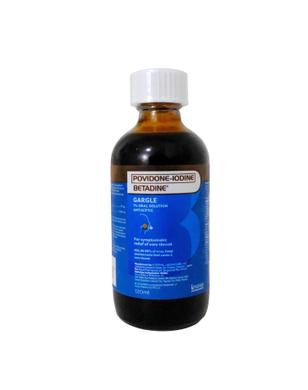
POVIDONE-IODINE (BETADINE®) Oral Gargle contains Povidone-Iodine, which kills 99.99% of bacteria, viruses, and fungi in as early as 30 seconds based on in-vitro data.⁴ Using an antiseptic gargle at the first sign of throat irritation helps reduce the overall microbial load in the throat and may help protect against secondary infections (i.e. a primary viral illness, like a cold or the flu, that weakens your immune system and allows bacteria to invade).⁵⁻⁶
How Do I Know When I’ll Need Prescription Antibiotics for Strep Throat?
Consulting a doctor is needed to confirm and receive a prescription if necessary. Because strep throat is bacterial, it requires evaluation by a healthcare professional.¹˒³ A doctor can also confirm the diagnosis using either a rapid strep test or a throat swab culture.¹˒³ If the doctor diagnoses the patient with strep throat, a full course of prescription antibiotics is necessary to eliminate the bacteria, shorten the duration of the illness, and help prevent potential complications (e.g. kidney inflammation, rheumatic fever).¹˒³ Antiseptic rinses like POVIDONE-IODINE (BETADINE®) Oral Gargle can be used alongside use of antibiotics to support overall oral and throat hygiene.⁴⁻⁶https://pubmed.ncbi.nlm.nih.gov/29633177/When
Should You See a Doctor About a Sore Throat?
Seek medical evaluation if you suspect strep throat or if throat pain is severe and persistent.¹˒³ You should consult a doctor immediately if you or a family member experiences:
Sudden, severe throat pain without a cough or runny nose ¹⁻³
Visible white patches or pus on the tonsils or back of the throat ²
Symptoms that do not improve after a few days of supportive care ¹˒³
Frequently Asked Questions About Sore Throat and Strep Throat
What is a sign of strep throat?
An indicator of strep throat is sudden, severe throat pain combined with swollen tonsils (often with white patches) and an absence of a cough or runny nose.¹⁻³
Can a viral sore throat turn into strep throat?
No, a viral sore throat cannot evolve into strep throat because it is caused by completely different organisms (viruses vs. bacteria).¹⁻³ However, a person can contract a bacterial infection while recovering from a viral illness.
Do antibiotics work for all sore throats?
No. Antibiotics only work against bacteria, not viruses. In fact, about 85% of sore throat cases are caused by viruses, so antibiotics may not help in most cases. Antibiotics should only be used when a bacterial infection is confirmed or suspected by a healthcare professional.²
How does an antiseptic gargle help a sore throat?
Antiseptic gargles containing Povidone-Iodine, such as POVIDONE-IODINE (BETADINE®) Oral Gargle, kill 99.99% of bacteria, viruses, and fungi – the root cause of sore throat – in as early as 30 seconds based on in-vitro data.⁴ This helps lower the germ count in the mouth and throat to curb microbial activity so that the sore throat doesn’t worsen.⁵⁻⁶
How do doctors test for strep throat?
Doctors can run a rapid strep test or take a throat swab culture to check for the presence of group A Streptococcus bacteria before prescribing antibiotics as needed.¹˒³
Take Control of Your Family's Throat Health
Navigating throat health safely starts with identifying the underlying cause.¹⁻³ For gradual throat scratchiness or itchiness accompanied by a cough or runny nose, manage symptoms at home with rest, fluids, and POVIDONE-IODINE (BETADINE®) Oral Gargle then use POVIDONE-IODINE (BETADINE®) Throat Spray to target sore throat-causing germs on-the-go at the source.²˒⁴⁻⁶ If symptoms present as sudden, severe throat pain with white patches and no cough, seek prompt medical attention for proper testing and antibiotic treatment as needed.¹˒³
If symptoms persist, consult your doctor.
Not recommended for children below age 6.
®: BETADINE is a Registered Trademark of iNova Pharmaceuticals.
ASC I0140P110626B