
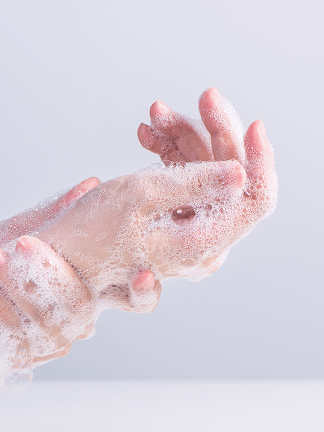
In the Philippines, crowds are a norm, whether you’re on your work commute or just at a mall to chill. But the more people you’re around, the more likely you are to catch infection-causing bacteria, fungi, and viruses if you’re not careful.
Indeed, there are some instances when regular soap just doesn’t make the cut if you want to protect yourself or your loved ones from these germs. And in this article, we talk about when you need something more potent — like an antiseptic skin wash.
Key takeaways
Regular soap works by physically lifting and rinsing away debris and microorganisms rather than killing them, which leaves a risk of lingering germs.
Unlike regular soap, antiseptic cleansers containing agents like povidone-iodine actively kill microorganisms and inhibit their growth based on lab tests.
Povidone-iodine can penetrate microbial cell walls and outperform other antiseptics in the removal of these pathogens, especially viruses based on lab tests.
What are the Limitations of Using Regular Soap?
To know when to use regular soap versus an antiseptic cleanser, we first need to know how they work. Simply put, regular soap removes debris, bacteria, viruses, and other microorganisms by lifting them up from the skin1. When you rinse the soap off, it takes the germs along with them.
That being said, regular soap alone doesn’t kill those germs; it simply aims to remove them from the affected area. Some older studies even note that soap dishes in high-risk areas, like hospitals, may contain bacterial colonies2.
So while regular soap fits the bill when it comes to cleaning off dirt or debris, there’s a risk of leaving illness-causing germs behind. If you really want to level up your hygiene, you’ll have to go beyond just washing with regular soap.
When to Use an Antiseptic Skin Cleanser
Unlike regular soaps, antiseptic skin cleansers are made to kill microorganisms1.
A study proves that antiseptics like povidone-iodine and chlorhexidine were shown to inhibit bacterial growth versus liquid soap3 when volunteers washed their hands with them.
Furthermore, these antiseptics can both penetrate the germ’s cell wall4-5 and wreak havoc on its internal structures. When it comes to viruses, however, povidone-iodine was shown to fare better at removing and killing viruses versus chlorhexidine gluconate6-7 based on the laboratory data of tested germs.
Therefore, having an antiseptic skin wash like the POVIDONE-IODINE (BETADINE®) 7.5% Skin Cleanser at hand is great especially if you’re in an area that’s prone to attract germs like hospitals and gyms.
How to Properly Use the POVIDONE-IODINE (BETADINE®) na Blue
While the POVIDONE-IODINE (BETADINE®) 7.5% Skin Cleanser’s formulation was shown to kill 99.99% of bacteria, fungi and viruses in as early as 30 seconds (based on in-vitro data), correct usage can help maximize its benefits. Here’s how:
Pour into your hands.
Apply to the skin area that you want to clean and protect.
Rub until it lathers and let it stay for up to one minute.
Rinse it off thoroughly with water.
Note: POVIDONE-IODINE (BETADINE®) 7.5% Skin Cleanser is not recommended for continuous daily use throughout the year and is not recommended for children below 2 years of age.
Because when regular soap isn’t enough, you deserve something that can help you achieve that hygiene level up.
If symptoms persist, consult your doctor.
ASC I0124P051826B-091125.png?sfvrsn=18115e52_2&imgeng=/m_box/w_360/h_390/ "BETADINE SC PROD SHOT (FRONT) 091125")


