WOUND CARE
 FEMININE CARE
 THROAT & NOSE CARE
 SKIN CARE
FEMININE CARE
8 Q&AsSKIN CARE
10 Q&AsTHROAT & NOSE CARE
10 Q&AsTreat the signs of a sore throat early with an antiseptic gargle or throat spray. The early signs of a sore throat include itchiness, dryness or scratchiness, tickling or irritation, having a hoarse, raspy voice, or feeling like you have a lump in your throat, the need to constantly clear your throat or even difficulty swallowing. You can help prevent sore throat by maintaining a healthy lifestyle, practicing good hand hygiene, and avoiding close contact with people who have sore throats or other respiratory infections.
Keep the Povidone Iodine (BETADINE) Gargle at home and bring the Povidone Iodine (BETADINE) Throat Spray when you're on the go. Both BETADINE® Gargle and Throat Spray contain povidone-iodine so they can both help kills 99.99% of viruses and bacteria in as early as 30 seconds, a triple targeting action on viruses, bacteria and fungi. (Based on lab data)
The gargle and the throat spray help relieve the early signs of a sore throat and are suitable for children 6 years old and older.
BETADINE® Gargle's active ingredient, povidone-iodine (PVP-I), has a rapid, research-backed germ-killing effect within 30 seconds of gargling. That said, killing germs quickly isn't the same as feeling better right away — how fast your symptoms actually ease up varies depending on the individual as well as the underlying cause and severity of the sore throat.
Salt-water gargling is a common home remedy, but it has no effect on viruses — the cause of most sore throats. Povidone-Iodine, on the other hand, is scientifically proven in the lab to kill the germs (both viruses and bacteria) that cause sore throats.
Cosmetic mouthwashes are designed mainly for fresh breath. BETADINE® Gargle is a medicated formulation specifically developed to treat throat and oral infections, not just mask odor.
Look for a medicated formulation — like povidone-iodine — that's proven to target both viruses and bacteria (based on lab data), not just one or the other, and that acts quickly to address the root cause of a sore throat rather than just easing symptoms.
No — BETADINE® Gargle generally doesn't stain teeth, skin, or hair. Its golden-brown color comes from its active ingredient, povidone-iodine, which keeps iodine's germ-killing power without staining. It washes off natural fibers with soap and water; on man-made fibers, use a stain remover, and wipe up spills on plastic flooring right away.
If you swallow a large amount, contact a doctor or pharmacist right away.
Don't use Povidone Iodine (BETADINE®) Gargle if you're pregnant or breastfeeding unless a healthcare professional has specifically told you to.
WOUND CARE
10 Q&AsNo. Povidone-Iodine (BETADINE®) is an antiseptic, not an antibiotic — it kills germs through multiple ways rather than through a biological mechanism that bacteria can adapt to, which significantly reduces the risk of resistance compared to some antibiotics.
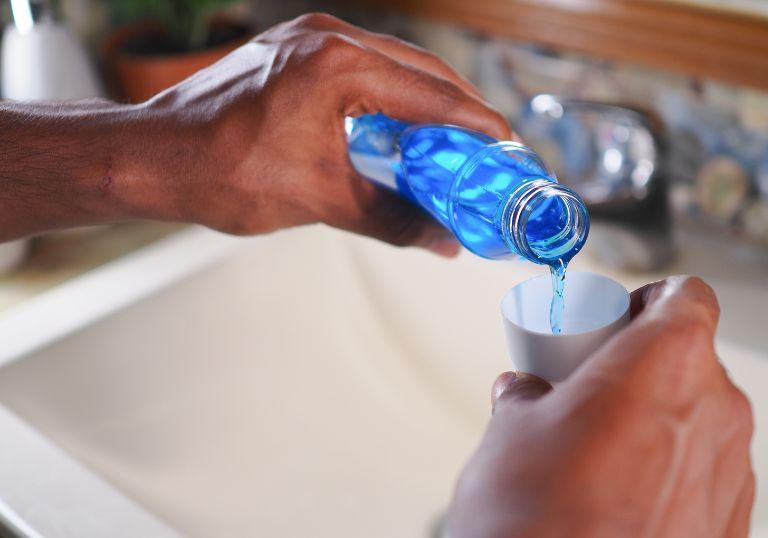
Understanding Antiseptic Gargles: What They Are and When To Use Them
Key takeaways
Unlike regular cosmetic mouthwashes, an antiseptic gargle contains ingredients engineered to actively kill infection-causing germs rather than just freshen one’s breath1.
Non-antiseptic mouthwashes are suitable for daily cosmetic oral hygiene1, while antiseptic gargles offer targeted protection to help stop the infection that causes sore throat or other mouth conditions.
Knowing when to use a cosmetic mouthwash or an antiseptic gargle helps create a smart oral care routine for you and your household.
If you’ve ever had a sore throat, you’ve probably experienced that moment of discomfort: a sudden scratchiness, dryness, or early tickle at the back of the throat that signals an infection.
Antiseptic gargles are one way to treat sore throat. For proactive people seeking protective solutions against this condition, these are a must to be kept around the house.
However, with so many oral rinses available on pharmacy shelves, it begs the question - which ones are actually "antiseptic," and how do these differ from the regular mouthwash we use after brushing.
In this article, we discuss what antiseptic gargles are, and how your family can use these.
What Is an Antiseptic Gargle and How Does It Work?
To understand what makes antiseptic gargles useful in combatting sore throat, let’s take a look at what goes into them and how these work.
The Composition and Germ-Fighting Mechanism of Antiseptic Gargles
An antiseptic gargle is often used for dental problems or oral infections1 as it contains ingredients that kill harmful microorganisms1 — like Povidone-Iodine, which is scientifically proven to kill 99.99%6 of viruses, bacteria, and fungi based on in-vitro data.
While rinsing with water after brushing your teeth can help flush away germs2, an antiseptic gargle is specifically made to kill those germs and treat or help prevent further infections3.
How Antiseptic Gargles Differ from Regular Mouthwashes
Not all oral solutions perform the same job; the key difference lies in their primary purpose:
Non-Antiseptic Gargles (Cosmetic Mouthwashes): These are often used to mask bad breath or provide a refreshing feeling after brushing1, but they do not kill the bacteria that cause bad breath4.
Antiseptic Gargles: Also known as “therapeutic mouthrinses”4, these have active ingredients that are meant to kill germs in the oral cavity and/or stop their growth5. They directly address the underlying causes of throat infection, inflammation and sore throat discomfort4.
When to Use an Antiseptic Gargle for Broad-Range Throat Care
Knowing when to use a cosmetic mouthwash or an antiseptic gargle helps create a smart oral care routine for you and your household. Here’s an easy guide:
Scenario | Option | Indication |
Everyday Morning & Evening Hygiene | Non-Antiseptic / Cosmetic Mouthwash | For daily cosmetic freshening, loosening food particles after meals, and maintaining a clean, fresh feeling after brushing. |
First Sign of a Sore Throat | To stop germ growth in the oral cavity before it leads to worsening a painful sore throat. | |
Managing Mild Oral Infections or Mouth Sores | Delivers broad-spectrum germ-killing action to keep minor oral wounds clean and protected against secondary infection. |
2 Reasons You Should Use Antiseptic Gargles to Protect Your Throat
When it comes to safeguarding your loved ones against potential infections, it is important to know that a cosmetic mouthwash is simply not enough to treat throat irritations or brewing infections. Relying on this is like applying perfume to a wound — it only masks the indicator without treating the root cause4.
Here is why you should keep an antiseptic gargle in your family's medicine cabinet so you’re ready when throat trouble strikes:
Destroys Pathogens at the Source: An antiseptic gargle (ex: one that contains povidone-iodine) attacks the cell structure of bacteria, viruses, and fungi, eliminating the root cause of early throat irritation based on in-vitro data3-6.
Proactive Protection for the Whole Family: Acting early at the first sign of a sore throat allows you to respond decisively, helping keep loved ones comfortable, healthy, and present for school or work.
By understanding the difference between daily mouthwashes and antiseptic gargles, you’re more informed on what to get for your family and also can confidently take action whenever a throat infection poses a threat to your household's peace of mind.
If symptoms persist, consult your doctor.
Oral rinses, gargles, and mouthwashes are generally not recommended for children under 6.
References:
Ahmad L. Impact of gargling on respiratory infections. All Life. 2021;14(1):147-158. doi:10.1080/26895293.2021.1893834.
Tsai CL, Wu PC. Possible beneficial role of throat gargling in the coronavirus disease pandemic. Public Health. 2020;185:45-46. doi:10.1016/j.puhe.2020.05.055
Kanagalingam J, Feliciano R, Hah JH, Lin V, Kuffner K, Leong A. Practical use of povidone-iodine-containing gargles and throat sprays in the management of sore throat. Int J Clin Pract. 2015;69(11):1247-1256. doi:10.1111/ijcp.12707. Available from: https://pmc.ncbi.nlm.nih.gov/articles/PMC6767541/. Accessed August 3, 2026.
American Dental Association. Mouthrinse (mouthwash). American Dental Association website. Updated December 1, 2021. Accessed August 4, 2026. https://www.ada.org/resources/ada-library/oral-health-topics/mouthrinse-mouthwash.
Brookes Z, McGrath C, McCullough M. Antimicrobial Mouthwashes: An Overview of Mechanisms-What Do We Still Need to Know?. Int Dent J. 2023;73 Suppl 2(Suppl 2):S64-S68. doi:10.1016/j.identj.2023.08.009
Tan E, Johari N. Comparative in vitro evaluation of the antimicrobial activities of povidone-iodine and other commercially available antiseptics against clinically relevant pathogens. GMS Hyg Infect Control. 2021;16:Doc05. doi:10.3205/dgkh000376. Available from: https://pmc.ncbi.nlm.nih.gov/articles/PMC7894193/. Accessed August 3, 2026.