WOUND CARE
 FEMININE CARE
 THROAT & NOSE CARE
 SKIN CARE
FEMININE CARE
8 Q&AsSKIN CARE
10 Q&AsTHROAT & NOSE CARE
10 Q&AsTreat the signs of a sore throat early with an antiseptic gargle or throat spray. The early signs of a sore throat include itchiness, dryness or scratchiness, tickling or irritation, having a hoarse, raspy voice, or feeling like you have a lump in your throat, the need to constantly clear your throat or even difficulty swallowing. You can help prevent sore throat by maintaining a healthy lifestyle, practicing good hand hygiene, and avoiding close contact with people who have sore throats or other respiratory infections.
Keep the Povidone Iodine (BETADINE) Gargle at home and bring the Povidone Iodine (BETADINE) Throat Spray when you're on the go. Both BETADINE® Gargle and Throat Spray contain povidone-iodine so they can both help kills 99.99% of viruses and bacteria in as early as 30 seconds, a triple targeting action on viruses, bacteria and fungi. (Based on lab data)
The gargle and the throat spray help relieve the early signs of a sore throat and are suitable for children 6 years old and older.
BETADINE® Gargle's active ingredient, povidone-iodine (PVP-I), has a rapid, research-backed germ-killing effect within 30 seconds of gargling. That said, killing germs quickly isn't the same as feeling better right away — how fast your symptoms actually ease up varies depending on the individual as well as the underlying cause and severity of the sore throat.
Salt-water gargling is a common home remedy, but it has no effect on viruses — the cause of most sore throats. Povidone-Iodine, on the other hand, is scientifically proven in the lab to kill the germs (both viruses and bacteria) that cause sore throats.
Cosmetic mouthwashes are designed mainly for fresh breath. BETADINE® Gargle is a medicated formulation specifically developed to treat throat and oral infections, not just mask odor.
Look for a medicated formulation — like povidone-iodine — that's proven to target both viruses and bacteria (based on lab data), not just one or the other, and that acts quickly to address the root cause of a sore throat rather than just easing symptoms.
No — BETADINE® Gargle generally doesn't stain teeth, skin, or hair. Its golden-brown color comes from its active ingredient, povidone-iodine, which keeps iodine's germ-killing power without staining. It washes off natural fibers with soap and water; on man-made fibers, use a stain remover, and wipe up spills on plastic flooring right away.
If you swallow a large amount, contact a doctor or pharmacist right away.
Don't use Povidone Iodine (BETADINE®) Gargle if you're pregnant or breastfeeding unless a healthcare professional has specifically told you to.
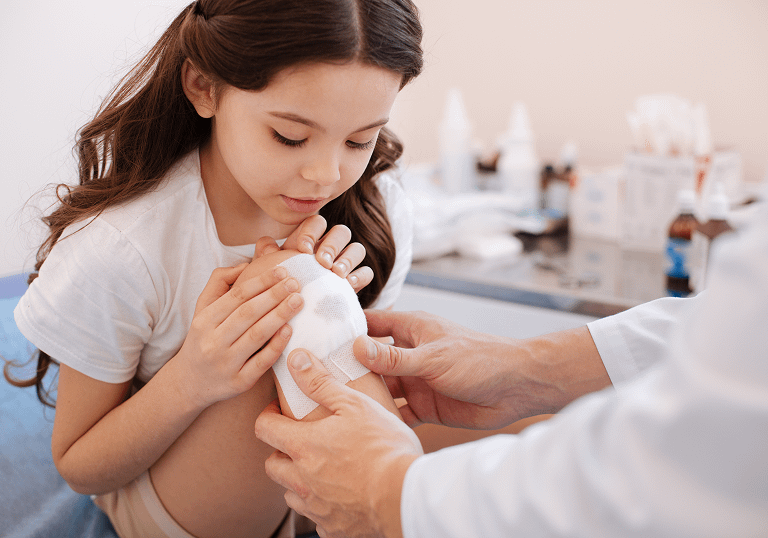
WOUND CARE
10 Q&AsNo. Povidone-Iodine (BETADINE®) is an antiseptic, not an antibiotic — it kills germs through multiple ways rather than through a biological mechanism that bacteria can adapt to, which significantly reduces the risk of resistance compared to some antibiotics.
Tired of Alcohol’s Sting on Wounds? Povidone-Iodine (BETADINE®) Provides a No-Sting Alternative
Importance of proper wound care and highlights povidone-iodine as a sting-free alternative to alcohol for cleaning, disinfecting, protecting, and supporting wound healing.
Small injuries will always be a part of our lives. From getting a skinned knee as a child to minor accidents in the kitchen, you’re bound to get them every now and then. In fact, one study shows you can even get up to 9,672 minor injuries within your lifetime1.
While you can’t avoid them, the next best thing you can do is treat them properly to support wound healing and help prevent further complications, such as sepsis2 — a life-threatening disease caused by infection that can shut down your organs.
One major thing to consider is what to treat your wounds with. Alcohol may be the first thing to come to mind, but the sting that comes with it can be a turn off for a lot of people. We’ve also noted other issues that come with disinfecting with alcohol in a previous blog3.
In this article, we provide a wound disinfectant alternative to alcohol when it comes to sting-free, proper wound care.
Key takeaways
Minor injuries are unavoidable and can lead to serious complications like sepsis if poorly managed.
Alcohol causes pain because it triggers pain-detecting nerve endings in the same way heat does.
No-sting alternatives to treat wounds exist.
Unlike alcohol, which cannot eliminate bacterial spores5, povidone-iodine provides a sting-free, no-alcohol solution9 that kills a wide range of germs based on lab testing.
Why Does Alcohol Sting?
If you’ve ever tried to disinfect your wounds with alcohol, you might have noticed how painful it is upon contact.
That’s because alcohols like ethanol react with nerve endings that detect pain, called nociceptors4. When you place alcohol on a wound, these pain receptors register it in the same way they register heat, thus creating alcohol’s characteristic sting.
Alcohol vs Povidone-Iodine for Wounds
Fortunately, not all disinfectants have that effect during wound treatment. And aside from lacking the characteristic sting, they can also help prevent infection in ways alcohol may not.
According to the Centers for Disease Control and Prevention (CDC)5, alcohol can kill active bacteria, fungi, and viruses. However, it may not eliminate bacterial spores, which are structures that help bacteria survive in extreme conditions and stay relatively dormant6.
On the contrary, iodophors — or iodine solutions like povidone-iodine — kill bacteria, viruses, and fungi, even certain bacterial spores over prolonged exposure7. While they do contain iodine, they don’t carry its irritating effects because iodine is gradually released from the povidone-iodine complex. So aside from being able to curb germs from reproducing, povidone-iodine is also less likely to sting when applied to wounds.
Povidone-iodine products, then, don’t just clean and disinfect wounds. They also help treat and protect them from further germ growth to help them heal properly.
Proper Wound Care with Povidone-Iodine (BETADINE®)
Aside from lacking the sting, Povidone-Iodine (BETADINE®) Wound Care also provides four wound treatment steps in one:
Cleans: Aside from wound treatment, Povidone-Iodine (BETADINE®) can also be used to clean your wounds.
Disinfects: It’s clinically-proven to kill 99.99% of bacteria, fungi and viruses in as early as 30 seconds (based on in-vitro data)7.
Protects: Its antiseptic property helps protect your wounds against infection.
Treats: Povidone-Iodine (BETADINE®) can also help the wound healing process by potentially accelerating tissue repair8.
Note: Povidone-Iodine (BETADINE®) is not recommended for use in children below 2 years of age.
If symptoms persist, consult your doctor.
ASC I0122P051826BReferences:
Fung B. Infographic: the average person gets 9,672 minor injuries in a lifetime. The Atlantic. Published May 30, 2012. Accessed October 23, 2025. https://www.theatlantic.com/health/archive/2012/05/infographic-the-average-person-gets-9-672-minor-injuries-in-a-lifetime/257777/.
Arora J, Mendelson AA, Fox-Robichaud A. Sepsis: network pathophysiology and implications for early diagnosis. Am J Physiol Regul Integr Comp Physiol. 2023;324(5):R613-R624. doi:10.1152/ajpregu.00003.2023.
Betadine Philippines. Debunking 4 common myths about the use of alcohols for wounds. Betadine Philippines website. Accessed October 23, 2025. https://ph.betadine.global/en/ph/knowledge-hub/article/debunking-4-common-myths-about-the-use-of-alcohols-for-wounds.
Trevisani, M., Smart, D., Gunthorpe, M. J., Tognetto, M., Barbieri, M., Campi, B., Amadesi, S., Gray, J., Jerman, J. C., Brough, S. J., Owen, D., Smith, G. D., Randall, A. D., Harrison, S., Bianchi, A., Davis, J. B., & Geppetti, P. (2002). Ethanol elicits and potentiates nociceptor responses via the vanilloid receptor-1. Nature Neuroscience, 5(6), 546–551. https://doi.org/10.1038/nn0602-852
Centers for Disease Control and Prevention. Chemical disinfectants: guideline for disinfection and sterilization in healthcare facilities (2008). Centers for Disease Control and Prevention website. Updated May 24, 2024. Accessed October 23, 2025. https://www.cdc.gov/infection-control/hcp/disinfection-sterilization/chemical-disinfectants.html.
ScienceDirect. Bacterial spore. ScienceDirect Topics. Accessed April 15, 2026. https://www.sciencedirect.com/topics/immunology-and-microbiology/bacterial-spore.
Tan et al. Comparative in vitro evaluation of the antimicrobial activities of povidone-iodine and other commercially available antiseptics against clinically relevant pathogens. GMS Hygiene and Infection Control 2021,Vol. 16, ISSN 2196-5226
Leaper DJ, Durani P. “Topical antimicrobial therapy of chronic wounds healing by secondary intention using iodine products.” International Wound Journal 2008; 5:361-368.
Ripa S, Bruno N, Reder RF, Casillis R, Roth RI. Clinical applications of povidone-iodine as a topical antimicrobial. In: Paulson DS, editor. Handbook of topical antimicrobials: Industrial applications in consumer products and pharmaceuticals. New York, NY: Marcel Dekker, Inc.; 2002. pp. 78-99.