WOUND CARE
 FEMININE CARE
 THROAT & NOSE CARE
 SKIN CARE
FEMININE CARE
8 Q&AsSKIN CARE
10 Q&AsTHROAT & NOSE CARE
10 Q&AsTreat the signs of a sore throat early with an antiseptic gargle or throat spray. The early signs of a sore throat include itchiness, dryness or scratchiness, tickling or irritation, having a hoarse, raspy voice, or feeling like you have a lump in your throat, the need to constantly clear your throat or even difficulty swallowing. You can help prevent sore throat by maintaining a healthy lifestyle, practicing good hand hygiene, and avoiding close contact with people who have sore throats or other respiratory infections.
Keep the Povidone Iodine (BETADINE) Gargle at home and bring the Povidone Iodine (BETADINE) Throat Spray when you're on the go. Both BETADINE® Gargle and Throat Spray contain povidone-iodine so they can both help kills 99.99% of viruses and bacteria in as early as 30 seconds, a triple targeting action on viruses, bacteria and fungi. (Based on lab data)
The gargle and the throat spray help relieve the early signs of a sore throat and are suitable for children 6 years old and older.
BETADINE® Gargle's active ingredient, povidone-iodine (PVP-I), has a rapid, research-backed germ-killing effect within 30 seconds of gargling. That said, killing germs quickly isn't the same as feeling better right away — how fast your symptoms actually ease up varies depending on the individual as well as the underlying cause and severity of the sore throat.
Salt-water gargling is a common home remedy, but it has no effect on viruses — the cause of most sore throats. Povidone-Iodine, on the other hand, is scientifically proven in the lab to kill the germs (both viruses and bacteria) that cause sore throats.
Cosmetic mouthwashes are designed mainly for fresh breath. BETADINE® Gargle is a medicated formulation specifically developed to treat throat and oral infections, not just mask odor.
Look for a medicated formulation — like povidone-iodine — that's proven to target both viruses and bacteria (based on lab data), not just one or the other, and that acts quickly to address the root cause of a sore throat rather than just easing symptoms.
No — BETADINE® Gargle generally doesn't stain teeth, skin, or hair. Its golden-brown color comes from its active ingredient, povidone-iodine, which keeps iodine's germ-killing power without staining. It washes off natural fibers with soap and water; on man-made fibers, use a stain remover, and wipe up spills on plastic flooring right away.
If you swallow a large amount, contact a doctor or pharmacist right away.
Don't use Povidone Iodine (BETADINE®) Gargle if you're pregnant or breastfeeding unless a healthcare professional has specifically told you to.
WOUND CARE
10 Q&AsNo. Povidone-Iodine (BETADINE®) is an antiseptic, not an antibiotic — it kills germs through multiple ways rather than through a biological mechanism that bacteria can adapt to, which significantly reduces the risk of resistance compared to some antibiotics.
Soap or an Antiseptic Cleanser? Here’s when to use POVIDONE-IODINE (BETADINE®) 7.5% Skin Cleanser instead
Highlights the limitations of regular soap and explains when using an antiseptic skin cleanser like povidone-iodine can provide better protection against germs.
In the Philippines, crowds are a norm, whether you’re on your work commute or just at a mall to chill. But the more people you’re around, the more likely you are to catch infection-causing bacteria, fungi, and viruses if you’re not careful.
Indeed, there are some instances when regular soap just doesn’t make the cut if you want to protect yourself or your loved ones from these germs. And in this article, we talk about when you need something more potent — like an antiseptic skin wash.
Key takeaways
Regular soap works by physically lifting and rinsing away debris and microorganisms rather than killing them, which leaves a risk of lingering germs.
Unlike regular soap, antiseptic cleansers containing agents like povidone-iodine actively kill microorganisms and inhibit their growth based on lab tests.
Povidone-iodine can penetrate microbial cell walls and outperform other antiseptics in the removal of these pathogens, especially viruses based on lab tests.
What are the Limitations of Using Regular Soap?
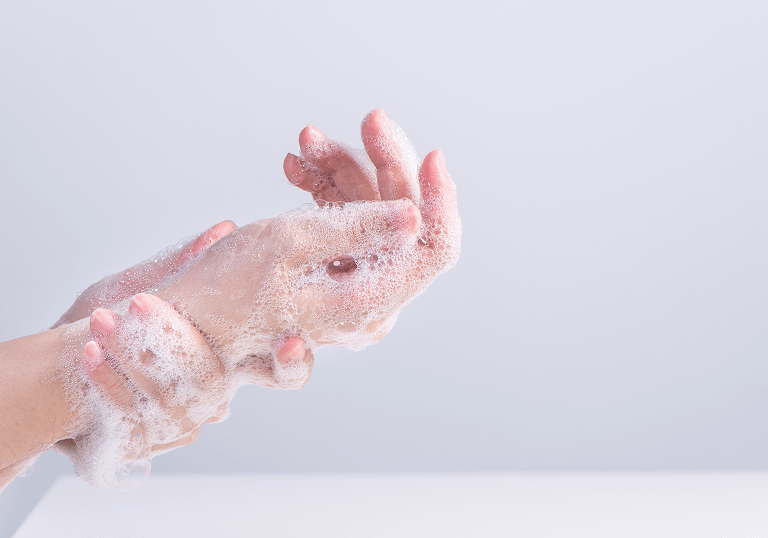
To know when to use regular soap versus an antiseptic cleanser, we first need to know how they work. Simply put, regular soap removes debris, bacteria, viruses, and other microorganisms by lifting them up from the skin1. When you rinse the soap off, it takes the germs along with them.
That being said, regular soap alone doesn’t kill those germs; it simply aims to remove them from the affected area. Some older studies even note that soap dishes in high-risk areas, like hospitals, may contain bacterial colonies2.
So while regular soap fits the bill when it comes to cleaning off dirt or debris, there’s a risk of leaving illness-causing germs behind. If you really want to level up your hygiene, you’ll have to go beyond just washing with regular soap.
When to Use an Antiseptic Skin Cleanser
Unlike regular soaps, antiseptic skin cleansers are made to kill microorganisms1.
A study proves that antiseptics like povidone-iodine and chlorhexidine were shown to inhibit bacterial growth versus liquid soap3 when volunteers washed their hands with them.
Furthermore, these antiseptics can both penetrate the germ’s cell wall4-5 and wreak havoc on its internal structures. When it comes to viruses, however, povidone-iodine was shown to fare better at removing and killing viruses versus chlorhexidine gluconate6-7 based on the laboratory data of tested germs.
Therefore, having an antiseptic skin wash like the POVIDONE-IODINE (BETADINE®) 7.5% Skin Cleanser at hand is great especially if you’re in an area that’s prone to attract germs like hospitals and gyms.
How to Properly Use the POVIDONE-IODINE (BETADINE®) na Blue
While the POVIDONE-IODINE (BETADINE®) 7.5% Skin Cleanser’s formulation was shown to kill 99.99% of bacteria, fungi and viruses in as early as 30 seconds (based on in-vitro data), correct usage can help maximize its benefits. Here’s how:
Pour into your hands.
Apply to the skin area that you want to clean and protect.
Rub until it lathers and let it stay for up to one minute.
Rinse it off thoroughly with water.
Note: POVIDONE-IODINE (BETADINE®) 7.5% Skin Cleanser is not recommended for continuous daily use throughout the year and is not recommended for children below 2 years of age.
Because when regular soap isn’t enough, you deserve something that can help you achieve that hygiene level up.
If symptoms persist, consult your doctor.
ASC I0124P051826BReferences:
Langley J. From soap and water, to waterless agents: update on hand hygiene in health care settings. Can J Infect Dis. 2002;13(5):285-286. doi:10.1155/2002/105306.
Jarvis JD, Wynne CD, Enwright L, Williams JD. Handwashing and antiseptic-containing soaps in hospital. J Clin Pathol. 1979;32(7):732-737. doi:10.1136/jcp.32.7.732
Buluş N, Kaleli I. Ceşitli antiseptiklerin el yikama sonrasi antibakteriyel etkilerinin karşilaştirilmasi [Comparison of antibacterial effects of different antiseptics after hand washing]. Mikrobiyol Bul. 2004;38(1-2):137-143.
Centers for Disease Control and Prevention. Chemical disinfectants: guideline for disinfection and sterilization in healthcare facilities (2008). Centers for Disease Control and Prevention website. Updated May 24, 2024. Accessed October 23, 2025. https://www.cdc.gov/infection-control/hcp/disinfection-sterilization/chemical-disinfectants.html.
Deus FP, Ouanounou A. Chlorhexidine in dentistry: pharmacology, uses, and adverse effects. Int Dent J. 2022;72(3):269-277. doi:10.1016/j.identj.2022.01.005.
Eggers M, Koburger-Janssen T, Ward LS, Newby C, Müller S. Bactericidal and Virucidal Activity of Povidone-Iodine and Chlorhexidine Gluconate Cleansers in an In Vivo Hand Hygiene Clinical Simulation Study. Infect Dis Ther. 2018;7(2):237-251. doi:10.1007/s40121-018-0205-1.
Tan et al. Comparative in vitro evaluation of the antimicrobial activities of povidone-iodine and other commercially available antiseptics against clinically relevant pathogens. GMS Hygiene and Infection Control 2021,Vol. 16, ISSN 2196-5226