WOUND CARE
 FEMININE CARE
 THROAT & NOSE CARE
 SKIN CARE
FEMININE CARE
8 Q&AsSKIN CARE
10 Q&AsTHROAT & NOSE CARE
10 Q&AsTreat the signs of a sore throat early with an antiseptic gargle or throat spray. The early signs of a sore throat include itchiness, dryness or scratchiness, tickling or irritation, having a hoarse, raspy voice, or feeling like you have a lump in your throat, the need to constantly clear your throat or even difficulty swallowing. You can help prevent sore throat by maintaining a healthy lifestyle, practicing good hand hygiene, and avoiding close contact with people who have sore throats or other respiratory infections.
Keep the Povidone Iodine (BETADINE) Gargle at home and bring the Povidone Iodine (BETADINE) Throat Spray when you're on the go. Both BETADINE® Gargle and Throat Spray contain povidone-iodine so they can both help kills 99.99% of viruses and bacteria in as early as 30 seconds, a triple targeting action on viruses, bacteria and fungi. (Based on lab data)
The gargle and the throat spray help relieve the early signs of a sore throat and are suitable for children 6 years old and older.
BETADINE® Gargle's active ingredient, povidone-iodine (PVP-I), has a rapid, research-backed germ-killing effect within 30 seconds of gargling. That said, killing germs quickly isn't the same as feeling better right away — how fast your symptoms actually ease up varies depending on the individual as well as the underlying cause and severity of the sore throat.
Salt-water gargling is a common home remedy, but it has no effect on viruses — the cause of most sore throats. Povidone-Iodine, on the other hand, is scientifically proven in the lab to kill the germs (both viruses and bacteria) that cause sore throats.
Cosmetic mouthwashes are designed mainly for fresh breath. BETADINE® Gargle is a medicated formulation specifically developed to treat throat and oral infections, not just mask odor.
Look for a medicated formulation — like povidone-iodine — that's proven to target both viruses and bacteria (based on lab data), not just one or the other, and that acts quickly to address the root cause of a sore throat rather than just easing symptoms.
No — BETADINE® Gargle generally doesn't stain teeth, skin, or hair. Its golden-brown color comes from its active ingredient, povidone-iodine, which keeps iodine's germ-killing power without staining. It washes off natural fibers with soap and water; on man-made fibers, use a stain remover, and wipe up spills on plastic flooring right away.
If you swallow a large amount, contact a doctor or pharmacist right away.
Don't use Povidone Iodine (BETADINE®) Gargle if you're pregnant or breastfeeding unless a healthcare professional has specifically told you to.
WOUND CARE
10 Q&AsNo. Povidone-Iodine (BETADINE®) is an antiseptic, not an antibiotic — it kills germs through multiple ways rather than through a biological mechanism that bacteria can adapt to, which significantly reduces the risk of resistance compared to some antibiotics.
How POVIDONE-IODINE (BETADINE®) 7.5% Skin Cleanser Helps with Acne Breakouts
For a lot of people, acne is a rite of passage. An embarrassing, painful one, but a rite of passage nonetheless.
Acne affects one in five people worldwide1 and can significantly impact your quality of life2. Understanding how it develops and how to treat it is the first step toward clearer skin.
With so many treatment options available - from gentle skin cleansers to facial procedures, choosing the right one can feel overwhelming. Sometimes, the best approach is to go back to the basics and understand the root cause.
In this blog, we then look at how people get acne, and what you can do to treat it.
Key takeaways
Acne is a widespread condition that can negatively affect how an individual sees themselves.
Acne is caused by an accumulation of sebum, dead skin cells, and hair that obstructs pores, thus fostering an ideal setting for bacterial growth.
While gentle cleansers remove surface impurities, an antiseptic cleanser like povidone-iodine helps stop the spread of acne infections.
What Causes Acne?
According to the National Institute of Arthritis and Musculoskeletal and Skin Diseases (NIAMS), acne occurs when your hair, sebum (your skin’s natural oil), and cells that line the follicle stick together and clog up your pores3. Bacteria thrive in this kind of environment and cause swelling that leads to pimples and lesions3.
Some factors can also heighten your risk for acne3, such as:
Hormonal changes
Family history
Medications
Age
That said, the following can lead to acne3:
Excess oil production
Dead skin cell buildup
Too many bacteria in pores
To treat acne breakouts, it’s important to deal with the source of the inflammation and infection, ex: bacteria on the face.
Why Use an Antiseptic Cleanser on Acne?
More than routine, washing your skin is one way to maintain skin health as it removes dirt, excess sebum, and other environmental impurities4.
For those with acne, a gentle skin cleanser is important as it does the job without further irritating the skin or stripping off its moisture4.
But aside from removing impurities that could clog the pores, it’s also important to address another factor leading to acne: bacteria.
Washing with an antiseptic skin cleanser not only removes sebum and dead skin cell buildup, but also kills off the common germs that cause acne. Thus, helping prevent your skin from flaring out further.
However, not every antiseptic skin cleanser is equally effective. In fact, certain products demonstrate only a restricted ability to fight bacteria5, making them less capable of reducing the bacterial load that triggers acne breakouts.
POVIDONE-IODINE (BETADINE®) 7.5% Skin Cleanser is scientifically proven to combat a wide range of bacteria6, including those that cause acne (based on in-vitro data)7.
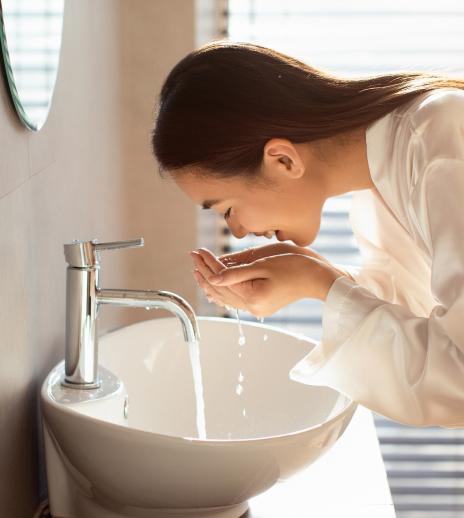
How to Wash Your Face with the POVIDONE-IODINE (BETADINE®) 7.5% Skin Cleanser
To help control the spread of acne infection, here’s how to use it:
Pour into your hands.
Apply to skin area that you want to clean and protect.
Rub until it lathers and let it stay for up to 1 minute.
Rinse it off thoroughly with water.
Not recommended for continuous daily use throughout the year.
If symptoms persist, consult your doctor.
ASC I0060P062626B
References:
Saurat JH et al. Epidemiology of acne and rosacea: A worldwide global study. J Am Acad Dermatol. 2024 May;90(5):1016-1018.
Nandy P, Shrivastava T. Exploring the Multifaceted Impact of Acne on Quality of Life and Well-Being. Cureus. 2024;16(1):e52727. Published 2024 Jan 22. doi:10.7759/cureus.52727
National Institute of Arthritis and Musculoskeletal and Skin Diseases. Acne. National Institutes of Health website. Updated September 2022. Accessed April 14, 2026. https://www.niams.nih.gov/health-topics/acne.
Mukhopadhyay P. Cleansers and their role in various dermatological disorders. Indian J Dermatol. 2011;56(1):2-6. doi:10.4103/0019-5154.77542
Mahabub Basha M, Balasubramanian B, Philip DC. Effect of different face washes on the bacterial pathogens of skin. World J Adv Res Rev. 2023;20(2):189-196. doi:10.30574/wjarr.2023.20.2.2139.
Chhabra N. Povidone-iodine in dermatology: a reappraisal. CosmoDerma. 2021;1:51. doi:10.25259/CSDM_30_2021.
Ripa S, Bruno R, Reder RF, et al. Clinical applications of Povidone-Iodine as a topical antimicrobial. In: Handbook of Topical Antimicrobials Industrial Applications. Industrial applications in consumer products and Pharmaceuticals. 2002. CRC Press; Print ISBN: 978-0-8247-0788-0.