WOUND CARE
 FEMININE CARE
 THROAT & NOSE CARE
 SKIN CARE
FEMININE CARE
8 Q&AsSKIN CARE
10 Q&AsTHROAT & NOSE CARE
10 Q&AsTreat the signs of a sore throat early with an antiseptic gargle or throat spray. The early signs of a sore throat include itchiness, dryness or scratchiness, tickling or irritation, having a hoarse, raspy voice, or feeling like you have a lump in your throat, the need to constantly clear your throat or even difficulty swallowing. You can help prevent sore throat by maintaining a healthy lifestyle, practicing good hand hygiene, and avoiding close contact with people who have sore throats or other respiratory infections.
Keep the Povidone Iodine (BETADINE) Gargle at home and bring the Povidone Iodine (BETADINE) Throat Spray when you're on the go. Both BETADINE® Gargle and Throat Spray contain povidone-iodine so they can both help kills 99.99% of viruses and bacteria in as early as 30 seconds, a triple targeting action on viruses, bacteria and fungi. (Based on lab data)
The gargle and the throat spray help relieve the early signs of a sore throat and are suitable for children 6 years old and older.
BETADINE® Gargle's active ingredient, povidone-iodine (PVP-I), has a rapid, research-backed germ-killing effect within 30 seconds of gargling. That said, killing germs quickly isn't the same as feeling better right away — how fast your symptoms actually ease up varies depending on the individual as well as the underlying cause and severity of the sore throat.
Salt-water gargling is a common home remedy, but it has no effect on viruses — the cause of most sore throats. Povidone-Iodine, on the other hand, is scientifically proven in the lab to kill the germs (both viruses and bacteria) that cause sore throats.
Cosmetic mouthwashes are designed mainly for fresh breath. BETADINE® Gargle is a medicated formulation specifically developed to treat throat and oral infections, not just mask odor.
Look for a medicated formulation — like povidone-iodine — that's proven to target both viruses and bacteria (based on lab data), not just one or the other, and that acts quickly to address the root cause of a sore throat rather than just easing symptoms.
No — BETADINE® Gargle generally doesn't stain teeth, skin, or hair. Its golden-brown color comes from its active ingredient, povidone-iodine, which keeps iodine's germ-killing power without staining. It washes off natural fibers with soap and water; on man-made fibers, use a stain remover, and wipe up spills on plastic flooring right away.
If you swallow a large amount, contact a doctor or pharmacist right away.
Don't use Povidone Iodine (BETADINE®) Gargle if you're pregnant or breastfeeding unless a healthcare professional has specifically told you to.
WOUND CARE
10 Q&AsNo. Povidone-Iodine (BETADINE®) is an antiseptic, not an antibiotic — it kills germs through multiple ways rather than through a biological mechanism that bacteria can adapt to, which significantly reduces the risk of resistance compared to some antibiotics.
10 Everyday Wounds that Need Proper Treatment
From kitchen mishaps during breakfast prep to a child’s tumble on the playground, minor skin injuries are an inevitable part of every busy family’s daily life. While these small accidents may seem like routine inconveniences, the way they are treated immediately following the injury determines how well the skin recovers.
Neglecting these seemingly minor wounds allows common debris and microbes to become deeply embedded, which can disrupt the healing process or even lead to persistent, distressing infections.1
To help you stay ahead of these risks, this article explores ten frequent wound types that can escalate from minor to critical, along with the proactive steps you can take to ensure a smooth recovery.
Key takeaways
When small, everyday wounds are left alone, nasty germs can rapidly build a sticky microscopic fortress called a biofilm directly inside them, protecting germs from the body’s immune system and antibiotics, as well as stalling healing.2
Common household and outdoor injuries — such as kitchen knife or paper cuts, shaving nicks, playground scrapes, bicycle falls, gardening wounds, pet scratches, and burns from pans, clothing irons, or glue guns — can embed debris and germs deep into the skin, disrupting the body's natural healing process if left unmanaged.
You don't need a complicated cabinet of items to care for these different types of everyday wounds — the POVIDONE-IODINE (BETADINE®) Wound Care range can clean, disinfect, protect, and treat wounds.
How Common Wounds Quietly Trap Germs and Stall Healing
But if we don’t clean and disinfect them as soon as possible, microscopic germs could move into the wound and assemble into dense, defensive networks called biofilms. These sticky biofilm shields act like a fortress, hiding pathogens directly from the body's immune responses and potentially stalling wound healing. 2
Here is how these everyday injuries can trap these microscopic roadblocks:
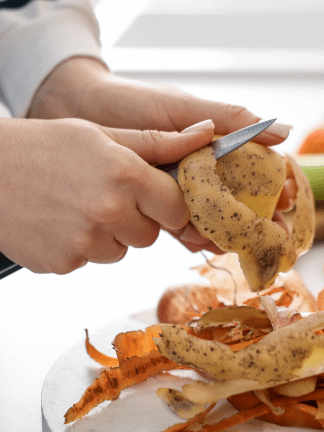
1. Kitchen Knife Cuts
A slip of the hand while prepping and cutting raw ingredients can push food-borne bacteria deep inside a narrow tissue flap. If it is not disinfected, these germs could quickly build a biofilm fortress that can delay wound healing.2
2. Paper Cuts
They look tiny, but paper cuts expose raw nerve endings to everything we touch. Because our hands are constantly moving, the cut's edges are continually pulled apart, which could let everyday surface bacteria settle into the cut to generate chronic micro-inflammation that stalls natural healing.4
3. Bicycle Falls
A classic childhood mishap, such as a deep, jagged scrape on the knee from sliding across rough outdoor pavement, grinds gravel, soil dust, and pavement bugs directly into wide, raw abrasions. This deeply embedded grit can trap the skin in an overactive, prolonged inflammatory loop, stalling the wound from moving forward into the essential tissue regeneration stage.4
4. Gardening Scratches
Minor pricks from sharp plant thorns or dry branches can inject soil-dwelling pathogens deep beneath the dermal layer that can keep the area tender and stuck in a non-healing phase.1
5. Shaving Nicks
Fast razor slips can leave raw micro-tears exposed on sensitive facial skin surfaces. When standard cosmetic shaving foams or heavily scented toiletries seep into these unshielded splits, they could potentially trigger localized chemical irritation and inflammation that can disrupt wound healing.5
6. Playground Injuries
When children skid across the playground, they often end up with raw, dirt-filled abrasions on their elbows or knees. This outdoor dirt can easily mix with sweat to create a perfect, moist breeding ground for bacteria, opening the door to possible infections.1,2
7. Pet Scratches
Playful claws from a family dog or cat can transfer specialized animal-borne microbes directly into fresh skin breaks.6 When transferred to humans, these specific bacteria can stealthily evade the body’s immune system to cause infection.7
8. Pan Burns
When you’re rushing around a hot stove, it can often lead to accidental contact with searing pans or spatulas. This can damage your skin and cause blisters which can leak or pop prematurely, leaving the raw skin underneath highly vulnerable to bacteria.8
9. Burns from Ironing or Steaming Clothes
Ever got a burn while ironing or steaming your clothes? As it turns out, the exudates accumulating inside thermal blisters can create an ideal environment for common environmental germs to breed rapidly, causing infection.8
10. Burns from a Glue Gun During Repairs or Crafts
Melted glue sticks to the skin, causing a thermal burn by trapping intense heat against the surface during household repairs or school projects. This damaged skin is vulnerable to germs, which can lead to infections that hinder the natural healing process.1,8
How Can You Help Keep Germs Out of Common Wounds?
When dirt, debris, and pathogens get stuck in these common wounds, a proper wound care routine can help remove them and aid in wound recovery. But you don’t need a complicated array of wound care products — the POVIDONE-IODINE (BETADINE®) Wound Care range cleans, disinfects, protects, and treats those wounds all in one, and without the sting of alcohol!
Here's how:
1. For Daily Versatility: The Wound Solution
For typical kitchen knife cuts, gardening punctures, pet scratches, and children's playground scrapes, POVIDONE-IODINE (BETADINE®) 10% Wound Solution’s formulation kills 99.99% of bacteria, viruses, and fungi in as early as 30 seconds based on in-vitro data.9 As it does, it keeps healthy tissue intact to help the natural healing process.1
2. For No-Sting, No-Touch Care: The Dry Powder Spray
When managing wide pavement scrapes, painful bicycle falls, or any raw injury that is sensitive to touch, POVIDONE-IODINE (BETADINE®) 2.5% Dry Powder Spray’s format allows you to spray microbicidal protection directly onto broken skin from a distance — offering an easy, non-drip application with no painful friction required.
3. For Avoiding Painful Infections: The Antiseptic Ointment
Whether it’s shaving nicks or superficial dry burns from glue gun mishaps, POVIDONE-IODINE (BETADINE®) 10% Ointment can be used to clean, disinfect, protect, and treat those common wounds and infections without the sting usually caused by alcohol.
4. For Burns and Blisters: The Targeted Cream
For those oozing burns and open blisters caused by hot baking pans and clothing irons, the POVIDONE-IODINE (BETADINE®) 5% Cream kills infection-causing bacteria, viruses, and fungi (based on in-vitro data)9 and can be used for kids 2+ years old.
If symptoms persist, consult your doctor.
Not recommended for children below age 2.
®: BETADINE is a Registered Trademark of iNova Pharmaceuticals.
ASC Ref Code I0161P081326B
References:
Bigliardi PL, Alsagoff SAL, El-Kafrawi HY, et al. Povidone iodine in wound healing: a review of current concepts and practices. Int J Surg. 2017;44:260-268. doi:10.1016/j.ijsu.2017.06.073.
Oropallo A, Rao AS, Del Pin C, Ranire-Maguire M, Mathew A. An objective comparative study of non-surgical cleansing techniques and cleanser types in bacterial burden management. Int Wound J. 2024;21(2):e14730. doi:10.1111/iwj.14730.
Schultz GS, Chin GA, Moldawer L, et al. Principles of wound healing. In: Fitridge R, Thompson M, eds. Mechanisms of Vascular Disease: A Reference Book for Vascular Specialists. University of Adelaide Press; 2011:chap 23. Accessed October 23, 2025. https://www.ncbi.nlm.nih.gov/books/NBK534261/.
Harun H, Haroen H, Mirwanti R, Apriani N, Akuoko CP. Uncovering the Benefits of Povidone Iodine Compared to Other Therapeutic Agents in Wound Infection Prevention and Healing Outcomes: A Scoping Review. J Multidiscip Healthc. 2024;17:3605-3616. Published 2024 Jul 25. doi:10.2147/JMDH.S469037.
Cowley K, Vanoosthuyze K. The biomechanics of blade shaving. Int J Cosmet Sci. 2016;38 Suppl 1:17-23. doi:10.1111/ics.12330
Chen TC, Lin WR, Lu PL, Lin CY, Chen YH. Cat scratch disease from a domestic dog. J Formos Med Assoc. 2007;106(2 Suppl):S65-S68. doi:10.1016/s0929-6646(09)60356-9Zachary JF. Mechanisms of Microbial Infections. Pathologic Basis of Veterinary Disease. 2017;132-241.e1. doi:10.1016/B978-0-323-35775-3.00004-7
Deng H, Pang Q, Zhao B, Vayssier-Taussat M. Molecular Mechanisms of Bartonella and Mammalian Erythrocyte Interactions: A Review. Front Cell Infect Microbiol. 2018;8:431. Published 2018 Dec 12. doi:10.3389/fcimb.2018.00431
Roy S, Mukherjee P, Kundu S, Majumder D, Raychaudhuri V, Choudhury L. Microbial infections in burn patients. Acute Crit Care. 2024;39(2):214-225. doi:10.4266/acc.2023.01571.
Tan E, Johari N. Comparative in vitro evaluation of the antimicrobial activities of povidone-iodine and other commercially available antiseptics against clinically relevant pathogens. GMS Hygiene and Infection Control 2021,Vol. 16, ISSN 2196-5226.